
Selective Coronary Angiography
- Home
- Selective Coronary Angiography
Selective Coronary Angiography
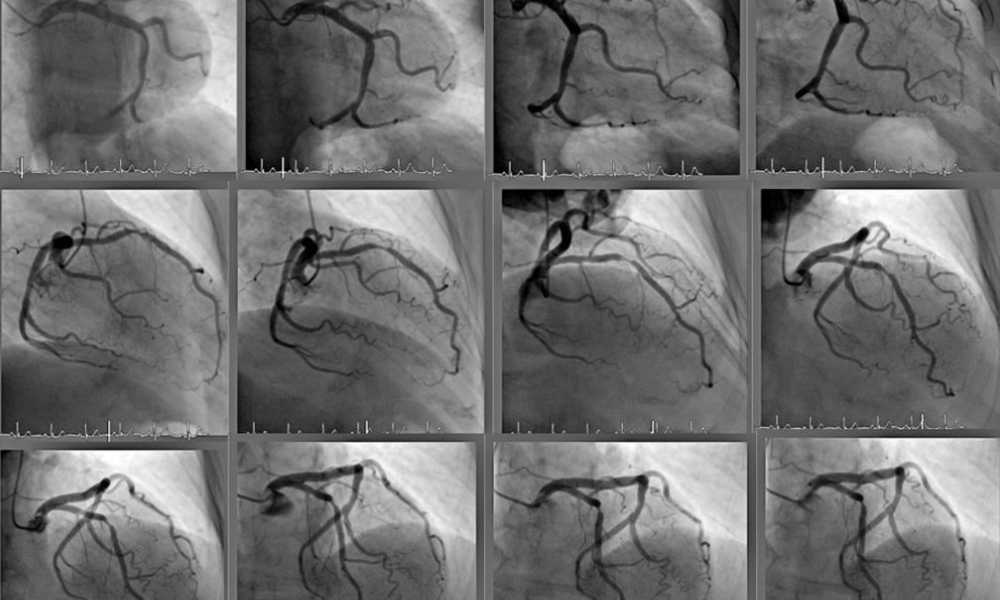
Coronary angiography is the process of making the coronary arteries (the arteries that supply blood and nutrients to the heart) visible by injecting a dye-containing fluid. In simple terms, angiography refers to the process of taking an X-ray of the coronary arteries. In common parlance, ‘having an angiogram’ refers to the procedure being performed on a person. ‘Angiogram’ comes from the Latin words ‘angi’ (meaning ‘vessel’) and “graphy” (meaning ‘image’). This method was discovered in the 1950s and 1960s. In earlier times, it was much more invasive, requiring the incision of arteries. Today, only a needle is used. Coronary angiography is a minimally invasive procedure that causes minimal disruption to the patient’s condition and cannot be classified as surgery. It is a life-saving procedure when necessary. Coronary angiography can be life-saving in cases of heart attack, spasm, or high cholesterol. Angiography is a procedure with many benefits. Thanks to angiography, it is possible to determine whether there is narrowing or complete blockage in the heart arteries. Coronary angiography is performed in a catheterisation laboratory. In this department, precautions are taken to ensure that neither the patient nor the staff are harmed.
Are there any risks associated with angiography?
Although coronary angiography is a procedure that is usually performed without any problems, it is an invasive diagnostic method and therefore carries a risk of complications. The risks of angiography can be described as follows: Major complications, which are classified as life-threatening, include a mortality rate of 1 in 1,400 cases (0.07%); stroke in 1 in 1,000 cases (0.1%); coronary artery injury in 1 in 1,000 cases (0.1%); and arterial access site complications in 1 in 500 cases (0.2%). Minor complications, which are more common, are temporary and include bleeding or hematoma (blood clot) at the access site, false aneurysm, arrhythmias, development of sensitivity to the contrast agent used, and vagal reaction (a condition characterised by nausea, vomiting, cold sweating, low blood pressure, and slow heart rate, usually occurring during insertion of the cannula into the artery or during its removal). The cardiologist will provide information about complications that may arise after angiography.
Is there a risk of death during angiography?
In very rare cases, a tear (dissection) may occur in the main artery (aorta) used as a pathway during coronary angiography and at the site where it enters the coronary artery. A tear in the aorta usually has a benign course, while a tear at the coronary artery opening can result in a heart attack and death. This risk is higher in people with serious coronary problems and especially in those with narrowing of the main artery. The likelihood of such fatal complications during angiography is roughly 1 in 1,000 patients. Angiography is a procedure with very low risk.
What are the risks of angiography?
Angiography performed by a specialist cardiologist is not harmful. Angiography can be performed safely in every hospital in our country.
Is coronary angiography a difficult procedure?
Today, coronary angiography is a much less difficult diagnostic procedure. The aim is to inject dye into the coronary arteries that supply the heart. Access to the coronary arteries can be achieved through an artery.
 Türkçe