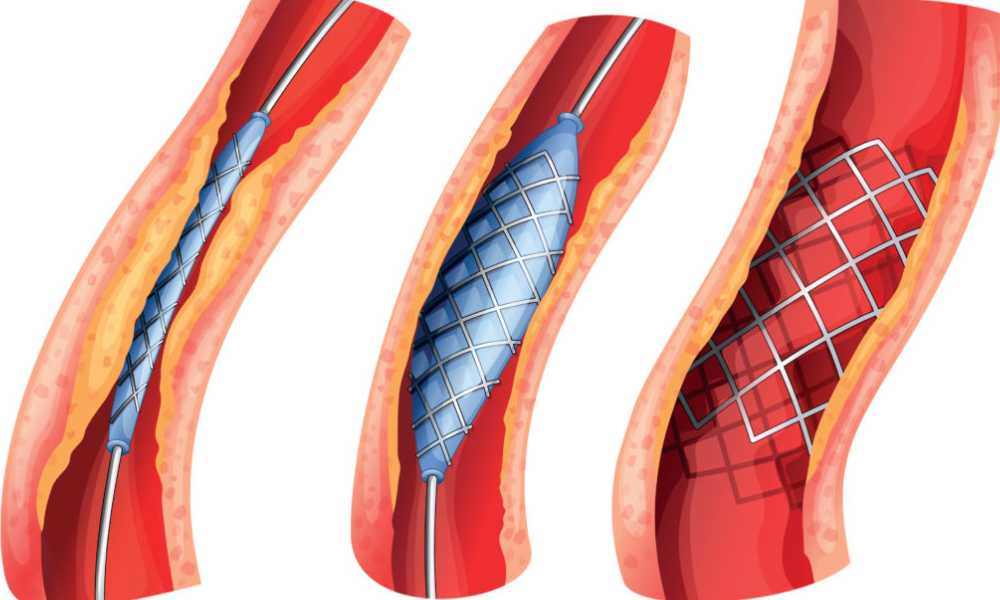
Coronary stents were developed to overcome some of the difficulties associated with balloon angioplasty and to improve blood flow in the opened vessel and have been widely used since the 1990s. The coronary stent (steel wire cage) is a method used to eliminate these problems in patients whose coronary vessels cannot be adequately patent with balloon therapy and/or rupture in the vessel occurs after the balloon procedure. The stent is placed on top of the balloon, and when the balloon is inflated inside the vessel, the stent is secured to the inside wall of the vessel. Depending on the length of the narrowed area, one or more stents may be needed. Within weeks, these stents are covered with a layer of endothelium, and the stent remains in the vessel wall for life. Over the years, better quality stents have been produced and this procedure has slightly reduced the need for bypass surgery. The success rate of balloon and stent placement is 65-99%. There is a 20-30% chance of re-narrowing (restenosis) within six months. This chance has been reduced to 8-15% with the newly introduced drug-eluting stents. If the stent becomes narrowed, another balloon or stent can be placed. After stenting, the patient may be admitted to the coronary intensive care unit. The hospital stay is usually 1-2 days. It is very important to keep the leg straight for the first 6-12 hours after the procedure.

 Türkçe